SMALL GROUP TRAINING
Two to four players, and someone guarding you.
A group of two to four is small enough that Alex can still correct every repetition, and large enough that every drill ends with a live defender. Same work as a private session, more competition inside it.
01 / WHAT IT IS
What is small group basketball training?
It is two to four players training together with one coach. Everyone gets the same volume of repetitions, and the difference from a private session is that most drills finish live, against a real defender instead of a cone. Groups are capped at four so nobody is standing in line.
Alex builds the group around the work, not around who signed up together. Players with similar needs train well together, and the pairing matters more than the age on the roster. A ninth grader who needs a left hand and a junior who needs a left hand can do the same block and push each other through it.
The structure is the same as a private session. A warm up that teaches something, a skill block with heavy repetition, then the same skill against a defender. What changes is the last part. In a group, the defender is another player who wants to win the rep, so the move has to work against real resistance and a real close out, not against a coach who knows what is coming.
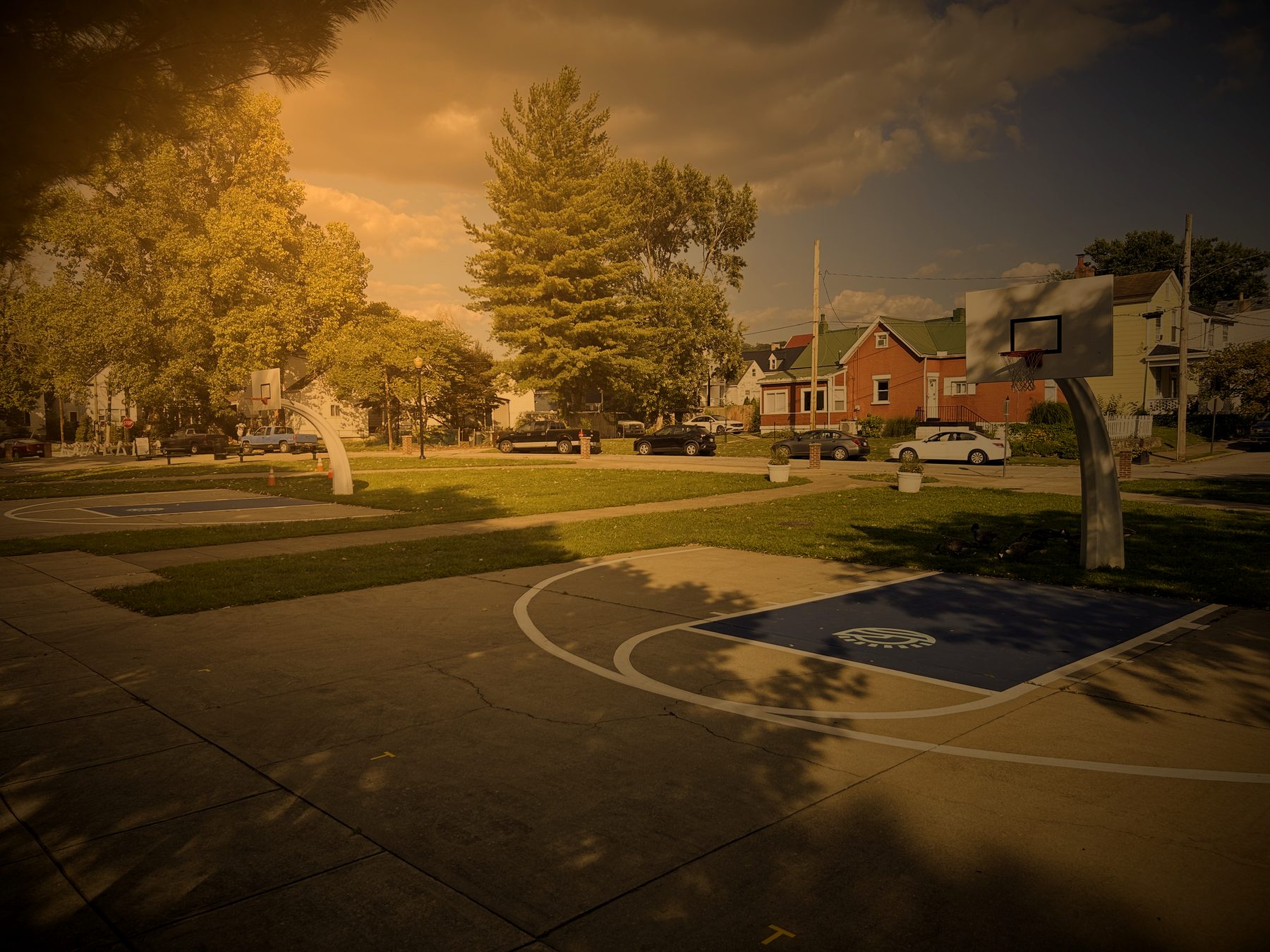
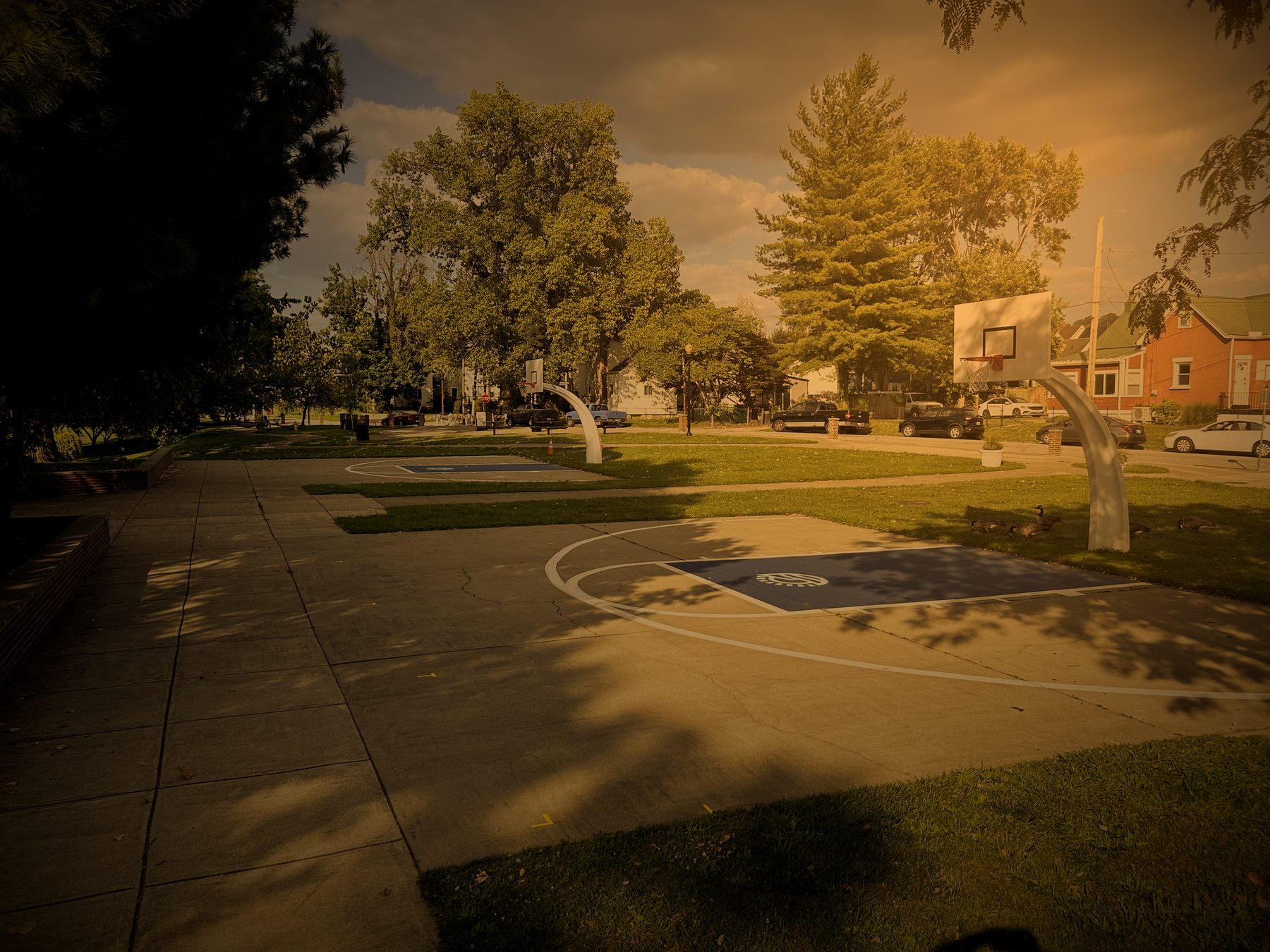
Groups meet outdoors at Bellevue Beach Park, at a court in Newport, or at Swope. Outdoor only, no gym. Wind and a live rim are part of it. Bring water, because there is no facility to duck into.
02 / INSIDE A SESSION
How a group session runs
- 01
Everyone works, nobody watches
Two to four players means no lines and no rotations where half the group rests. The cap exists so Alex can still see and correct every repetition.
- 02
Same skill, matched needs
Players are grouped by what they are working on rather than by age or team. Two players fixing the same finishing hand make faster progress together than apart.
- 03
Live reps with a scoreboard
Most blocks end one on one or two on two, with a score kept. A move you can only hit unguarded is not learned yet, and a score makes that obvious fast.
- 04
Correction in front of the group
Fixes are said out loud so everyone hears them. Watching another player get corrected and then avoiding the same mistake is a real part of how this works.
04 / WHAT CHANGES
What a group gives you that a private does not
The hard cap on group size, set so every repetition can still be watched and corrected rather than just counted.
Fixed limit, not a guideline.
Most blocks end against a real defender who is trying to win, which is the only way to test whether a skill actually transferred.
Structural difference from private sessions.
Share of high school boys basketball players who reach NCAA basketball at any division. Division I alone is 1.1%.
See the three monthly packages. All three package prices are published.
06 / Questions
What people ask about this
Can I bring my own group?
Yes. Two, three or four players who already know each other is a normal way to book, and it is common for teammates to come together before a season. Alex will still assess each player and may split the work if their needs are far apart. If your group is one player short he may pair you with another player working on the same thing.
How much does small group training cost?
Small group sessions are priced per group rather than at the private rate. All three prices are published, so you know the number before you speak to anyone. Nobody is asked to sign up for a block of sessions in order to try one.
Is a group as good as a private session?
For different things, yes. A group is better for competing, for live repetitions and for learning to read a defender who is genuinely trying to stop you. A private session is better when a movement has to be taken apart and rebuilt. Many players do both, using privates for mechanics and groups for pressure.
What happens if it rains?
All three courts are outdoors, at Bellevue Beach Park, in Newport and at Swope. There is no indoor backup, so weather moves sessions. Alex will tell you as early as he can and reschedule. If your family needs a guaranteed indoor time every week, this is honestly not the right setup for you.
Book a session and find out where the gap actually is.
$280 to $320 a month, outdoors at Bellevue Beach, Newport or Swope. Alex replies within a day.