
Home / Ages / High School
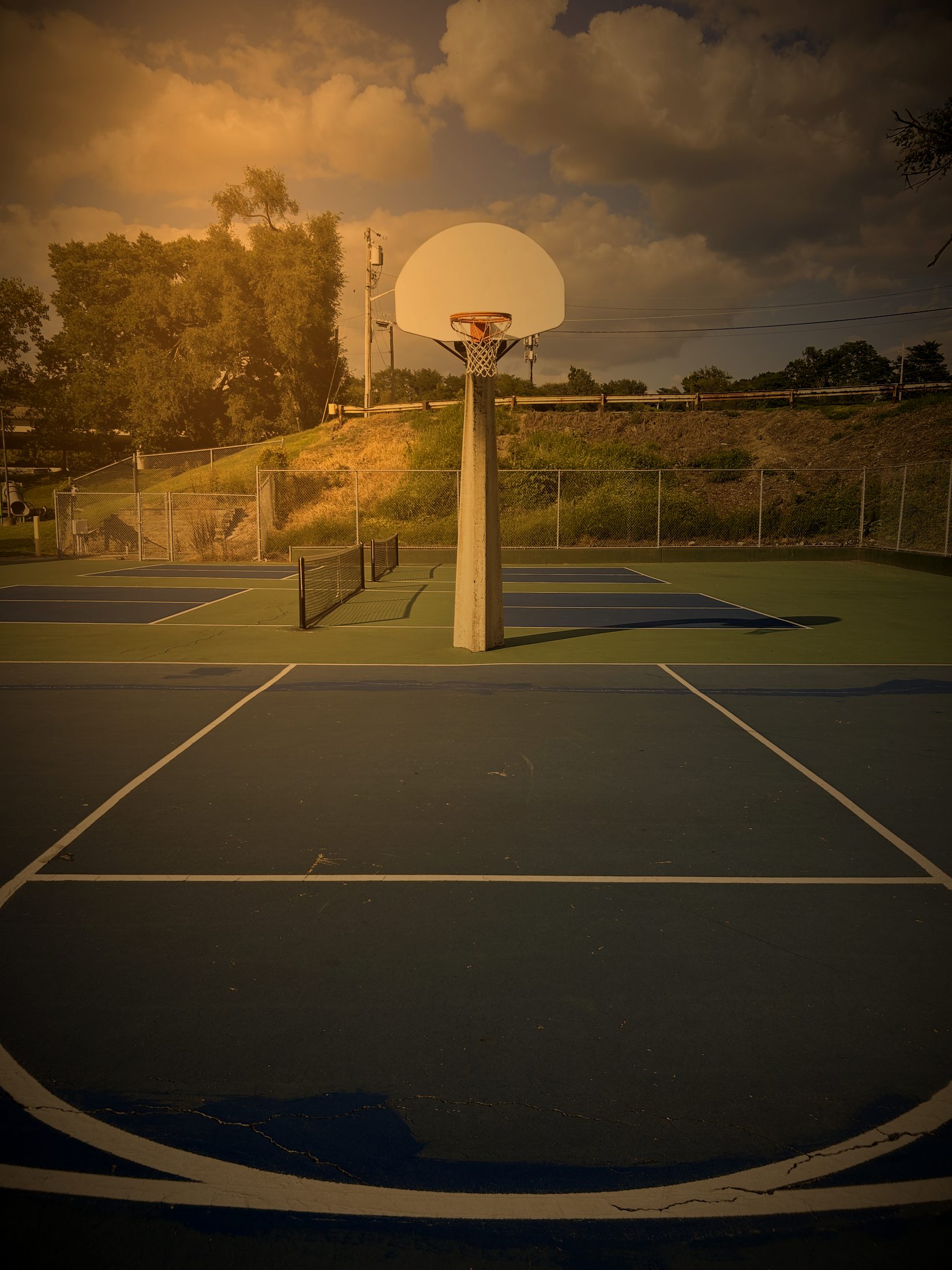
HIGH SCHOOL
Your school coach runs the season. I work around it
High school players get one system, one rotation and one coach who decides minutes. My job is to send back a player who does what that coach asks for, better than last month. Training runs $280 to $320 a month, outdoors, one player at a time.
01 / STRAIGHT ANSWER
Can a high school player train with an outside coach during the season?
Yes, and it works best when the school coach outranks me on every decision. Their practice plan, their minutes, their rest days, their system. I fit skill work into the gaps and I reduce volume when the school schedule gets heavy. If those two things conflict, the school coach wins.
The fastest way to hurt a high school player is to hand them a second set of instructions that contradicts the first. If your coach wants the ball out of your hands inside fourteen seconds, I am not going to spend a session building an isolation package you will never be allowed to use. I would rather ask what the coach is asking for and make you the best version of that player, plus give you the skills that will matter after this season ends.
In season, the priority is maintenance and recovery, not overhaul. Legs are the scarce resource from November through March. Sessions get shorter, the volume goes down, and the focus narrows to the two or three things that show up in your actual minutes. Big mechanical changes get scheduled for the offseason, where there is room to be uncomfortable for a few weeks.
Out of season is where real ground gets made up. That is when a handle gets rebuilt, a shot gets moved, a weak hand gets useful, and a player learns to read a defense instead of memorizing a move. Skill comes from repetition and drill work. Nothing about that changes because a player got older.
Kentucky adds a wrinkle worth naming. There is no class system here. Every school plays into one single-elimination state tournament, the Sweet 16, so a small school can draw a large one, and Northern Kentucky splits across the 9th and 10th Regions. Nobody gets a bracket sized to their enrollment, which means a roster spot and a regional run both come down to what individual players can actually do.
02 / THE WORK
How high school sessions are structured
Built from your position, your body and the way you already play, then adjusted to where you are in the school calendar.
- 01
Skills that survive a live defender
Everything is finished against pressure or a read. A move that only works uncontested is not a skill, it is a warmup.
- 02
Decision making under time pressure
Basketball is a game of split-second decisions. Reads get trained on a clock so the answer is automatic when a defense takes the first option away.
- 03
In season maintenance and lower volume
From the first practice to the last game, sessions get shorter and narrower. The goal is to keep the skill sharp without stealing legs from Friday night.
- 04
Offseason rebuilds and weak hand work
The months without games are when a shot gets moved, a handle gets rebuilt and the non dominant hand becomes usable. That work needs room to look bad first.
04 / CONTEXT
The numbers behind a high school roster spot
Share of high school boys basketball players who go on to play NCAA basketball at any division, from 540,704 high school participants to 19,617 in the NCAA.
Share of high school girls basketball players who go on to play NCAA basketball at any division, from 356,240 high school participants to 16,823 in the NCAA.
Kentucky has no basketball class system. One single-elimination state tournament, so small schools face large ones, and Northern Kentucky splits across the 9th and 10th Regions.
Kentucky high school tournament format
Most high school players will finish their careers in high school. That is a reason to get better now, not a reason to stop.
05 / Questions
What people ask about this
Will training with you cause a problem with my school coach?
It should not, because I treat that coach as the decision maker. Their system, their practice plan, their minutes. I will happily build a session around what they are asking you to do, and if they ask you to back off outside work during a heavy stretch, that is the answer. If you want, tell them where you are training. Most coaches are fine with skill work they can see is not competing with them.
Should I train during the season or wait until it ends?
Both work, they just do different jobs. In season we maintain: short sessions, low volume, two or three specific things that show up in your minutes. Offseason is when we change something structural, like a shooting base or a weak hand. If your legs are already gone by January, we scale back rather than push through.
Do you help with AAU team placement or exposure?
No. AAU showcases skill, it does not develop it, and I am on the development side of that line. I have no role in getting you on a team or in front of anyone. What I can do is make sure that when you are in front of people, the thing they see is worth watching.
How long is a session and where does it happen?
Sessions are one player at a time on outdoor public courts: Bellevue Beach Park in Bellevue, a court in Newport, or Swope. Outdoor is deliberate. There is no gym. Length is set by what we are working on and where you are in the season, and in season sessions are intentionally shorter than offseason ones.
Book a session and find out where the gap actually is.
$280 to $320 a month, outdoors at Bellevue Beach, Newport or Swope. Alex replies within a day.